Color Mixing
Understanding how colors interact is one of the most fundamental skills in painting. It's not just about creating the color you see—it's about understanding relationships, temperature, and harmony.
We explore the color wheel, learning how primary colors combine to create secondary and tertiary colors. But more importantly, we develop an intuitive sense for how colors work together—which combinations create harmony, which create contrast, and how to use color temperature to create depth and mood.
Color mixing is both technical and intuitive. The technical knowledge gives you control, but the intuitive sense—developed through practice and observation—allows you to create palettes that feel right, even when they're not strictly "correct."
Primary Colors
The foundation of all color mixing. Understanding how red, blue, and yellow interact is essential.
Color Temperature
Learning to distinguish warm and cool colors, and how to use temperature to create depth and atmosphere.

Brushwork
The way you apply paint with a brush is as much a part of your artistic voice as the colors you choose. Different brushes, different strokes, different pressures—all create different effects.
We explore the variety of brushes available and how each one behaves. Round brushes for detail work and washes, flat brushes for broad strokes and edges, filberts for soft blending. Each tool has its purpose, but there's also room for experimentation.
Beyond brush selection, we explore stroke techniques—from delicate, controlled marks to bold, expressive gestures. The way you move your brush can convey energy, calm, precision, or spontaneity.
Brush Types
Understanding the characteristics of different brushes and when to use each one.
Stroke Techniques
Exploring different ways of applying paint, from controlled detail work to expressive gestures.

Composition
Composition is about how you arrange elements on the canvas. It's about balance, flow, and creating a visual path that guides the viewer's eye through your painting.
We explore traditional compositional principles—the rule of thirds, leading lines, focal points. But we also discuss when to follow these rules and when to break them. Good composition isn't about rigid formulas—it's about creating a sense of harmony and interest.
Composition also involves understanding negative space, the relationship between foreground and background, and how to create depth on a flat surface. These are skills that develop through observation and practice.
Balance & Flow
Creating visual harmony through the arrangement of elements and the movement of the viewer's eye.
Focal Points
Understanding how to direct attention and create areas of interest within your composition.
Light & Shadow
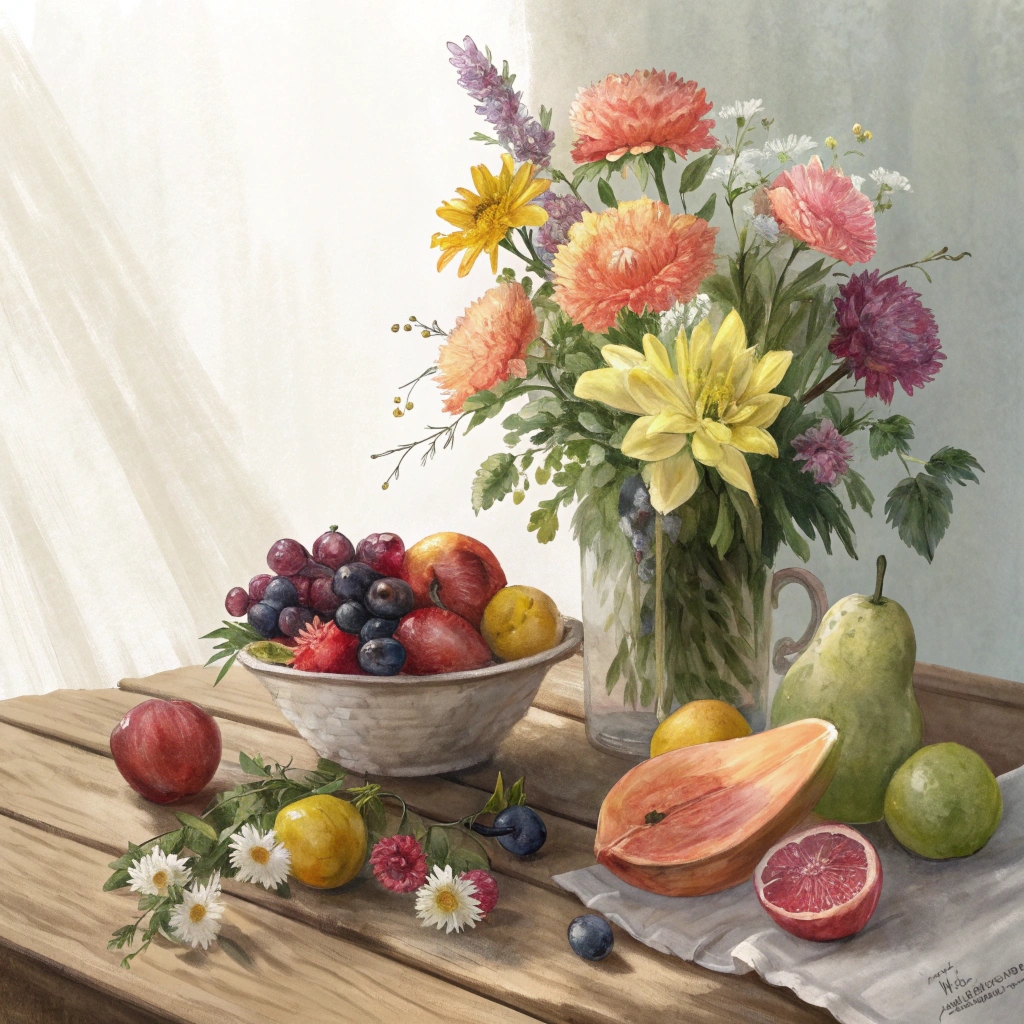
Light shapes everything we see. Understanding how light interacts with form is essential for creating paintings that feel three-dimensional and alive.
We explore value relationships—the range from light to dark. Understanding value is often more important than understanding color when it comes to creating form and depth. A painting with good value relationships will read clearly even if the colors are unusual.
We also explore how light creates highlights, mid-tones, and shadows, and how these areas define form. Observing light carefully—noticing how it falls, how it creates edges, how it reflects—is a skill that deepens with practice.
Value Relationships
Understanding the range from light to dark and how value creates form and depth.
Observing Light
Learning to see how light shapes form, creates edges, and defines the character of what you're painting.